Understanding the Main VAT Schemes in the UK
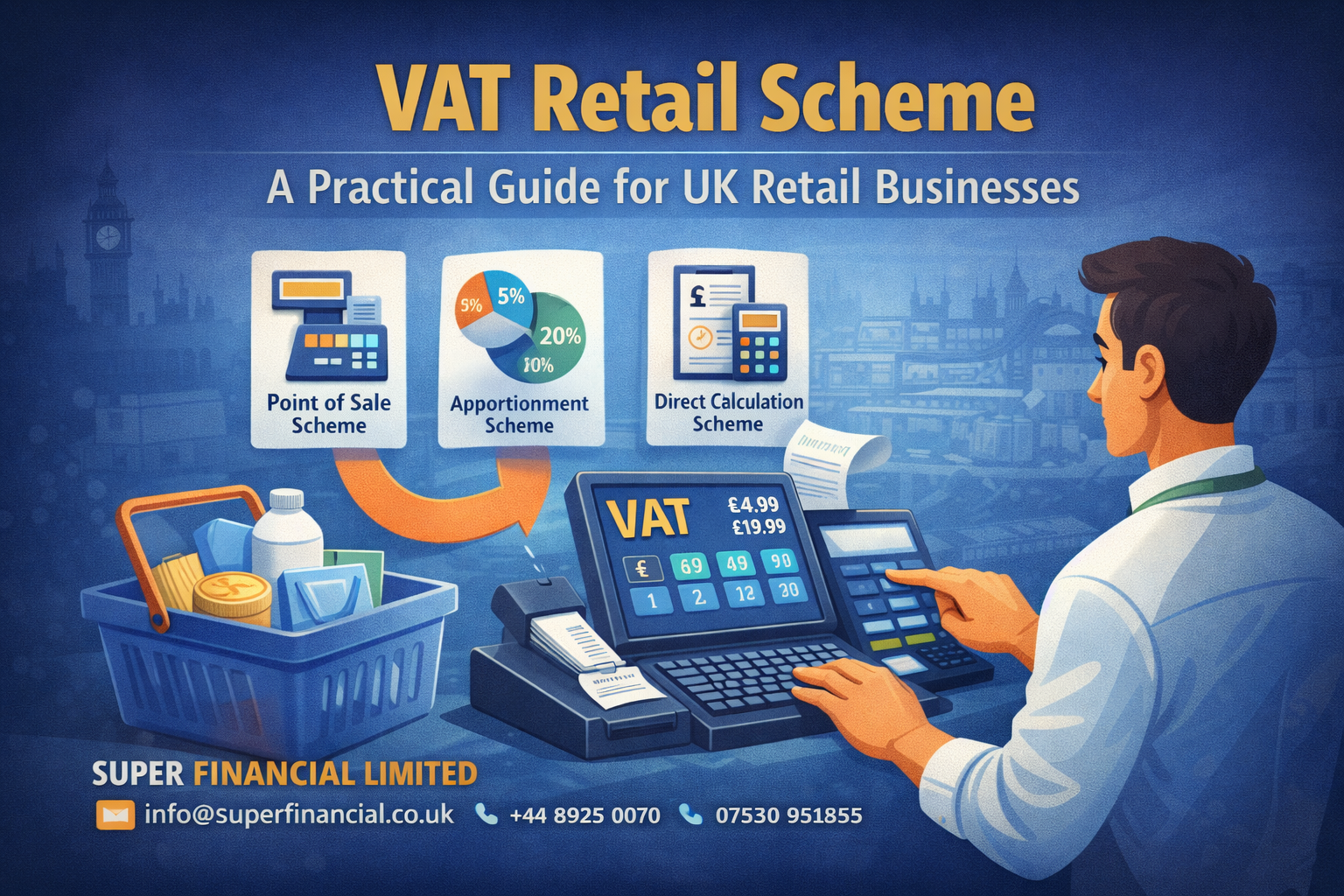
In the UK, VAT-registered businesses have different options when it comes to how they account for VAT. These options are known as VAT schemes. Choosing the right VAT scheme isn’t just about compliance—it can make a significant difference to your cash flow and how much liability you pay to HMRC. Let’s explore the three main VAT schemes used in the UK: the Standard VAT scheme, the Flat Rate Scheme, and the Margin Scheme.
The Standard VAT Scheme
A business must register for VAT in the UK if its taxable turnover exceeds £90,000 in a rolling 12-month period or if it expects to exceed that threshold in the next 30 days. The standard VAT scheme is the default method used by most businesses. Under this scheme, businesses charge VAT on their sales (output VAT) and reclaim VAT on their purchases (input VAT). The difference between these two amounts is either paid to HMRC or reclaimed, depending on whether you’ve paid more or collected more.
This scheme requires detailed records. You must keep track of all VAT charged and all VAT incurred. This is particularly important when dealing with different types of supplies. For example, if your business deals with both standard-rated and exempt sales, you can’t simply reclaim 100% of the VAT on your purchases. VAT should be apportioned based on the proportion of taxable use, which is known as partial exemption.
The Flat Rate Scheme (FRS)
Designed to simplify VAT reporting for small businesses, the Flat Rate Scheme allows you to pay a fixed percentage of your gross turnover as VAT. This means you do not reclaim VAT on purchases (with a few exceptions, like capital assets over £2,000).
To join the Flat Rate Scheme, your business must have a VAT taxable turnover of £150,000 or less, excluding VAT. Once in the scheme, you can remain until your total business income exceeds £230,000 in a 12-month period, at which point you must leave the scheme. It is important to regularly monitor your turnover to ensure continued eligibility.
Each industry has its own flat rate percentage, and this rate typically benefits businesses with low VAT claimable expenses. One key advantage is the reduced administrative burden—record-keeping becomes simpler since you don’t need to track input VAT for most items. However, you still need to keep invoices and records to support your sales.
It’s important to note that while this scheme reduces complexity, it may not always be financially beneficial, especially if your business has significant input VAT that would otherwise be recoverable under the Standard VAT scheme.
The Margin Scheme
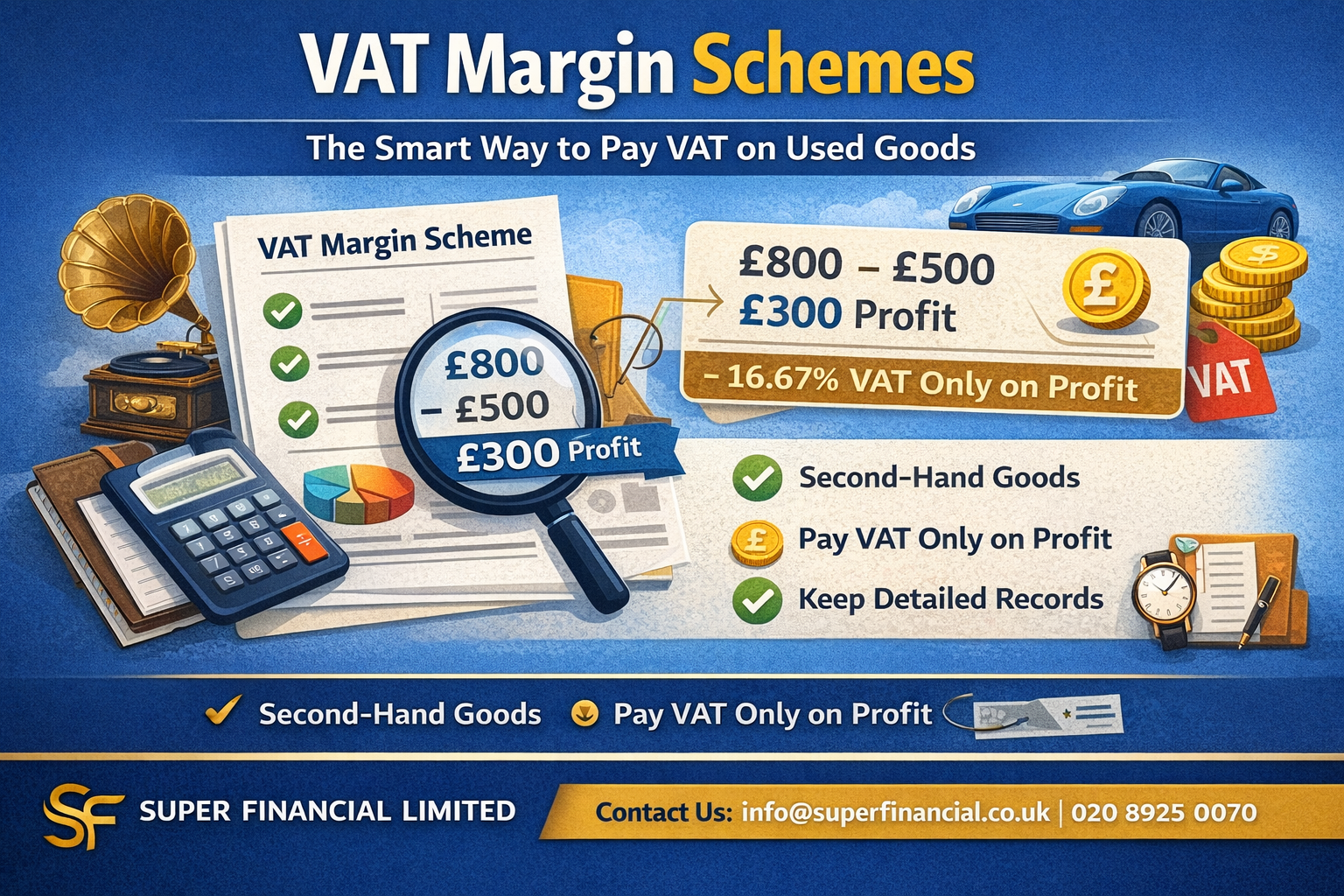
This scheme is commonly used by businesses that deal in second-hand goods, antiques, art, or collectibles. Instead of paying VAT on the full selling price, you only pay VAT on the profit margin (i.e. the difference between your purchase price and sale price). This makes a big difference in sectors where profit margins are relatively small.
This means careful record-keeping is essential. You must keep detailed logs of the purchase and sale prices of each item sold under the scheme. VAT invoices cannot be issued in the usual way under this scheme—your invoices must clearly state that the Margin Scheme applies.
Under the Margin Scheme, you can’t reclaim any VAT charged on the purchase of goods, as VAT is only paid on the profit margin—not the full selling price.
How can Super Financial Limited help you?
At Super Financial Limited, we understand that VAT can be complicated. Whether you’re on the Standard scheme or looking to simplify with the Flat Rate or Margin Scheme, we help you stay compliant while managing your books efficiently. We tailor our advice to your industry and guide you through the VAT scheme that suits you best.
If you’re unsure about which scheme works best for your business, or if you’re worried about getting your VAT apportionment wrong in case of mixed (standard and exempt) supplies, let our team help you make sense of it all. Choosing the right VAT scheme isn’t just about compliance—it can shape how efficiently your business runs and how much tax you pay.